

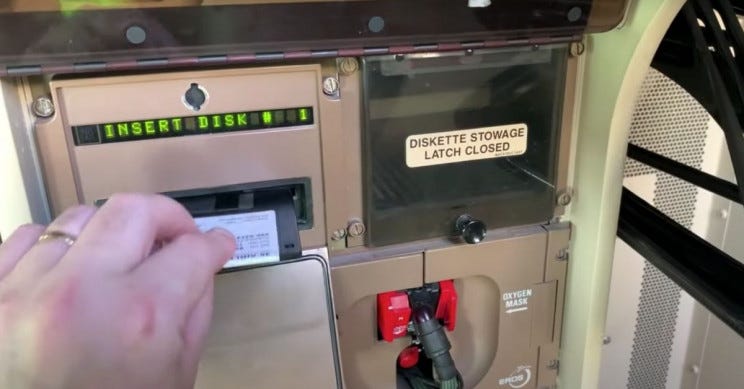
The Boeing 747 that flies you to Hawaii still uses floppy disks to update its onboard flight system software.
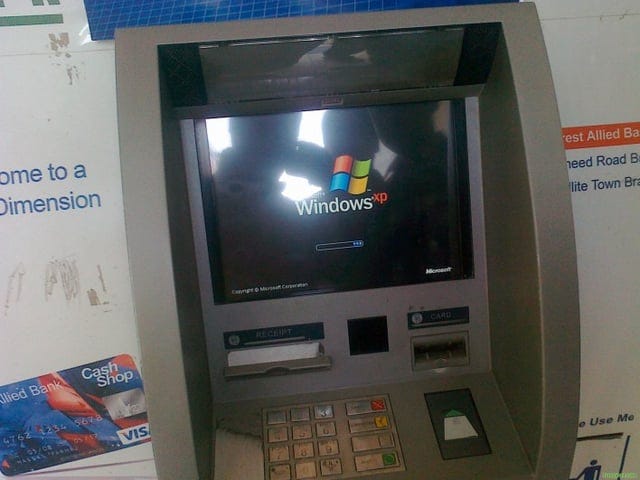
The ATM around the corner is likely running Windows XP.
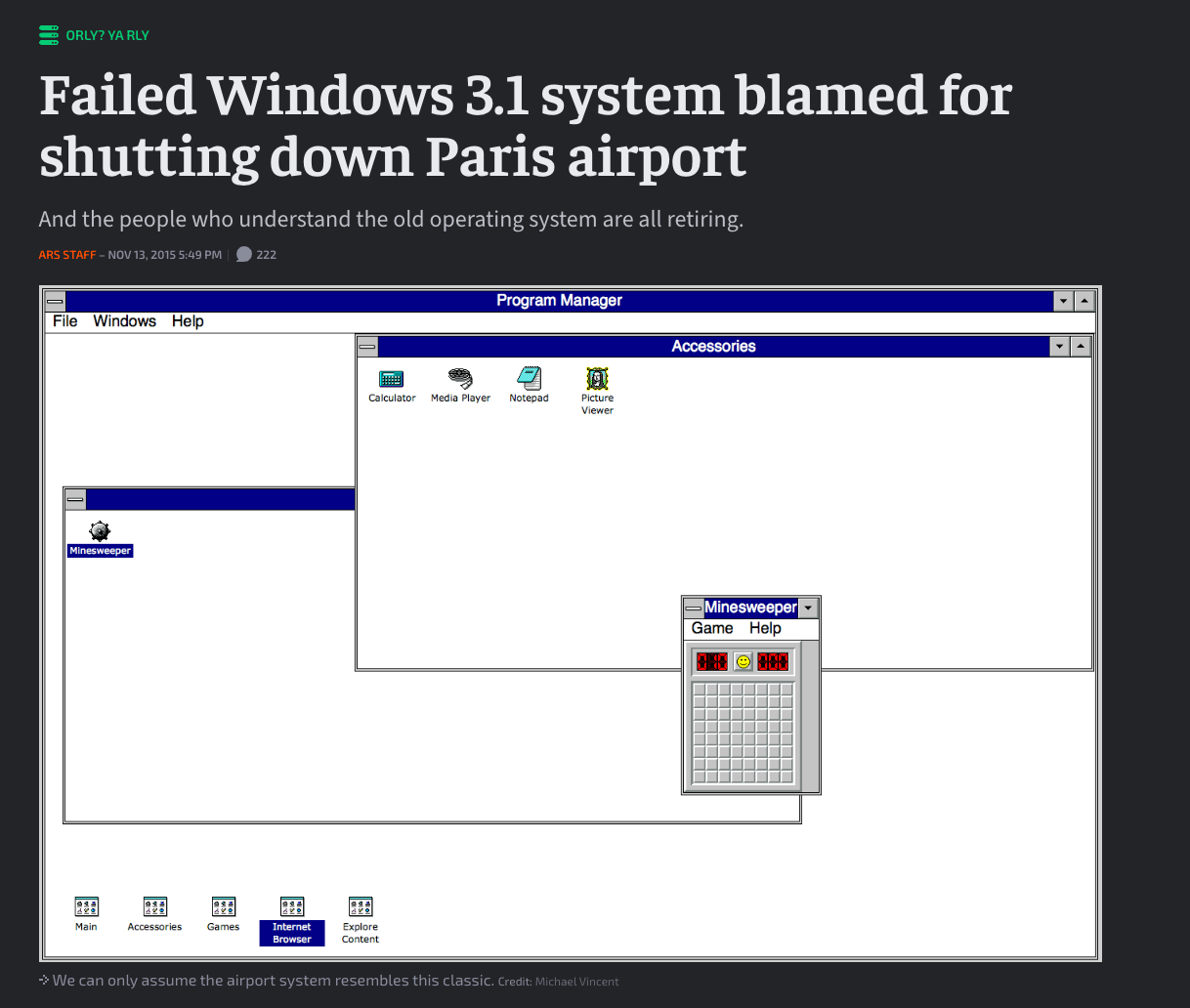
Windows 3.1, was still used in France ten years ago, 23 years after its release in 1992.
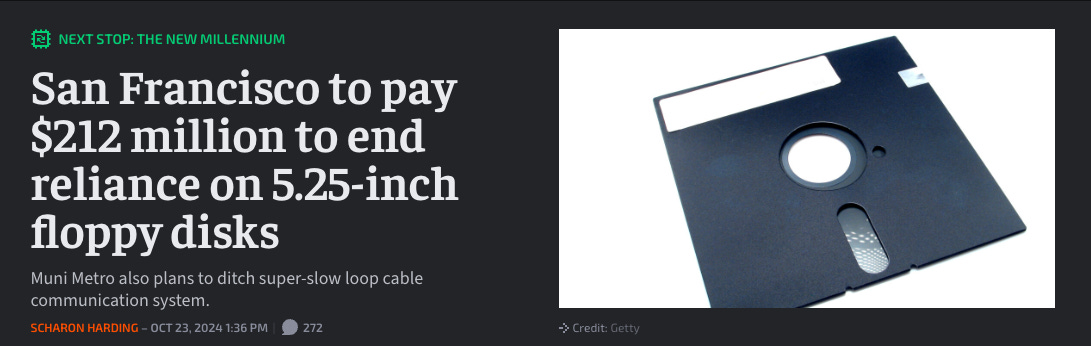
The San Francisco Municipal Transportation Agency (SMFTA) the closest city to the heart of Silicon Valley, paid $212M in 2024 to get off floppy disks.
There are many other examples: your bank or insurance likely relies on COBOL, military systems rely on old versions of the Ada programming language, and many satellites still operate on old CPUs as powerful as a 1980 Gameboy.
I am in awe when I see how far users can go to make an existing system last. Despite a product being declared obsolete, users still try to do everything possible to use it. This is a testimony of how much users love the product and how robust it is.
In a world where software is becoming disposable and a JavaScript package may no longer be viable 6 months after its release, I admire engineers who put in the effort to design a system that can last decades. I equally admire those who hack to make obsolete systems still usable today and push them to their last limits.
Building any piece of software is becoming easier every day. Even with the help of coding agents, building great software that lasts is still hard.